...

Freeze Pen Skin Spot Removal in Ottawa

Skin tags, warts, age spots and other small, harmless spots frozen away in seconds with precise nitrous oxide cryotherapy. No cutting and no needles, at our private surgical facility in Kanata.

Years of Experience
20 +
Surgeries Per Year
300 +
Procedures Performed
6500 +

Non-Surgical · Kanata, Ottawa

Freeze Pen at a Glance

What it treats
Skin tags, warts, age spots, seborrheic keratoses, cherry angiomas and other small, harmless spots
Treatment time
5 to 15 minutes per session. Each spot is frozen for just a few seconds.
Comfort
A quick, cold sting. Most people don't need numbing; it's available if you'd like it. No needles or incisions.
Downtime
Usually none. Most people go straight back to work or their day.
Healing
A small blister or scab may form and falls off on its own. Most spots are gone in about 4 to 5 weeks.
Sessions
Often one. Some spots need more than one session, depending on size. Your 4-week follow-up visit is included in the session price.
Where
Our private surgical facility in Kanata, with free parking
Who treats you
Our aesthetic nurse and aestheticians, at our private surgical facility in Kanata
First step
Our aesthetic nurse and aestheticians assess every spot before it is frozen. We don't freeze anything suspicious or undiagnosed; that must be cleared by your family doctor or dermatologist first.
Options
Skin tags · Warts · Age spots · Seborrheic keratoses · Cherry angiomas · Milia
Price
$150 to $300 per sessionDepends on the size and number of spots treated. Your exact price is confirmed at your consultation, before anything is treated.

Freeze Pen Before & After

A small raised spot at the outer corner of the eye, before and after Freeze Pen treatment at Kanata Plastic and Cosmetic Surgery. The spot was treated in seconds, without cutting. Results vary from person to person, and spots close to the eye are treated with extra care.

Before and after Freeze Pen treatment: a small raised spot near the outer corner of a closed eye is gone in the after photo
About the Treatment

What Is the Freeze Pen?

The Freeze Pen is a hand-held cryotherapy pen that removes small, harmless skin spots by freezing them. A fine stream of nitrous oxide, at about −89°C, is aimed through a narrow tip straight at the spot. The cells inside it freeze and break down, and over the next few weeks your body sheds the treated spot and replaces it with new skin.

It's a quick, non-surgical alternative to cutting or burning a spot off. There's no incision, no stitches and usually no downtime, and because the tip is so precise, the healthy skin around the spot is left alone. Many people treat several spots in one short visit.

Freeze Pen is also known as a cryotherapy pen, a cryopen or cryosurgery for benign skin lesions. It's a different treatment from whole-body cryotherapy chambers and from Venus Freeze, which is a skin-tightening treatment.

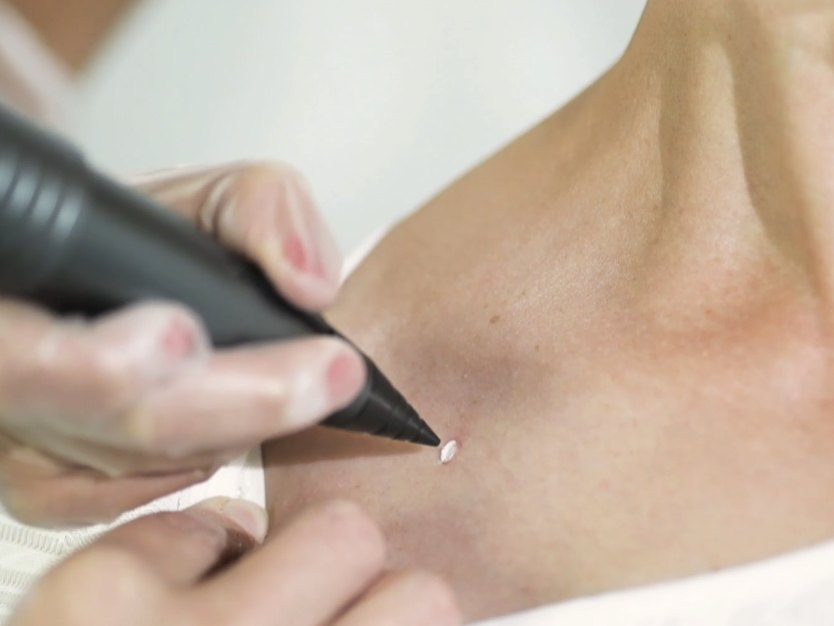
Gloved hand holding a Freeze Pen tip against a small spot on the side of the neck
How It Works

How Does Freeze Pen Cryotherapy Work?

Freezing has been used to treat harmless skin growths for decades. The Freeze Pen makes it precise enough for small spots on the face and body. It works in three stages:

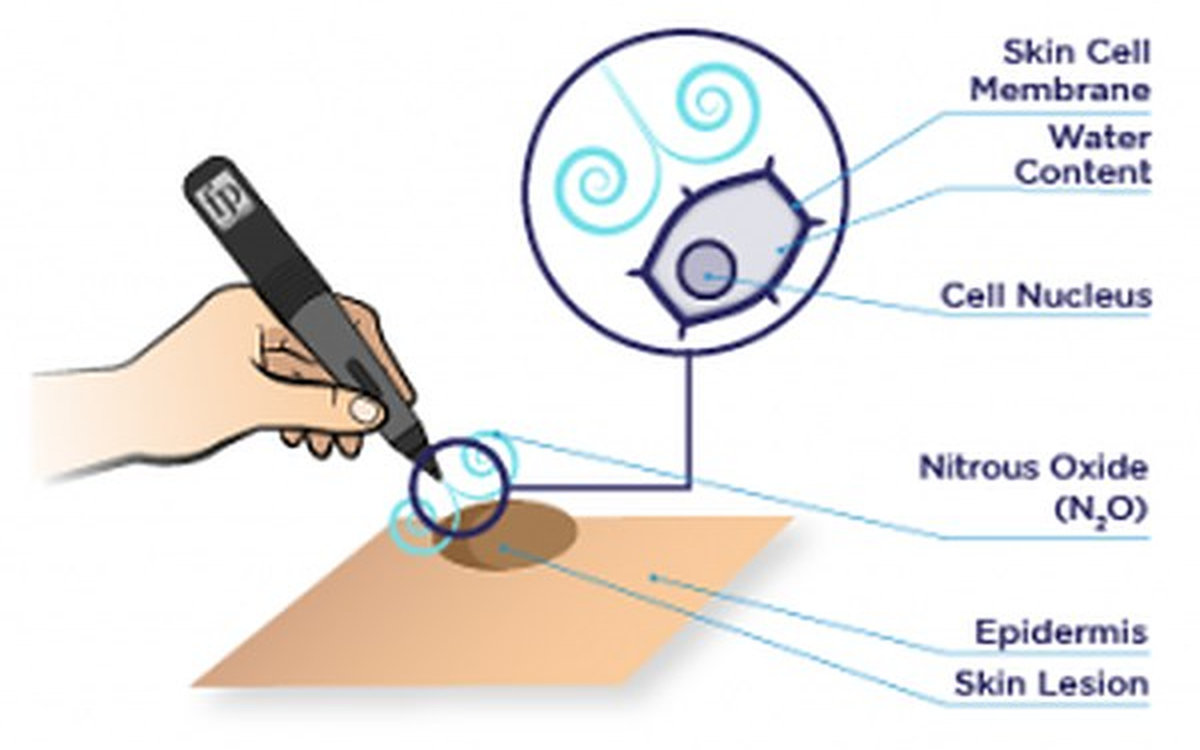
Diagram: a hand-held pen sprays nitrous oxide onto a skin lesion; inset shows a skin cell with its membrane, water content and nucleus
Step 01

Pinpoint freezing

The pen tip is held a few millimetres from the spot and releases short bursts of nitrous oxide. The spot turns white with frost for a few seconds.

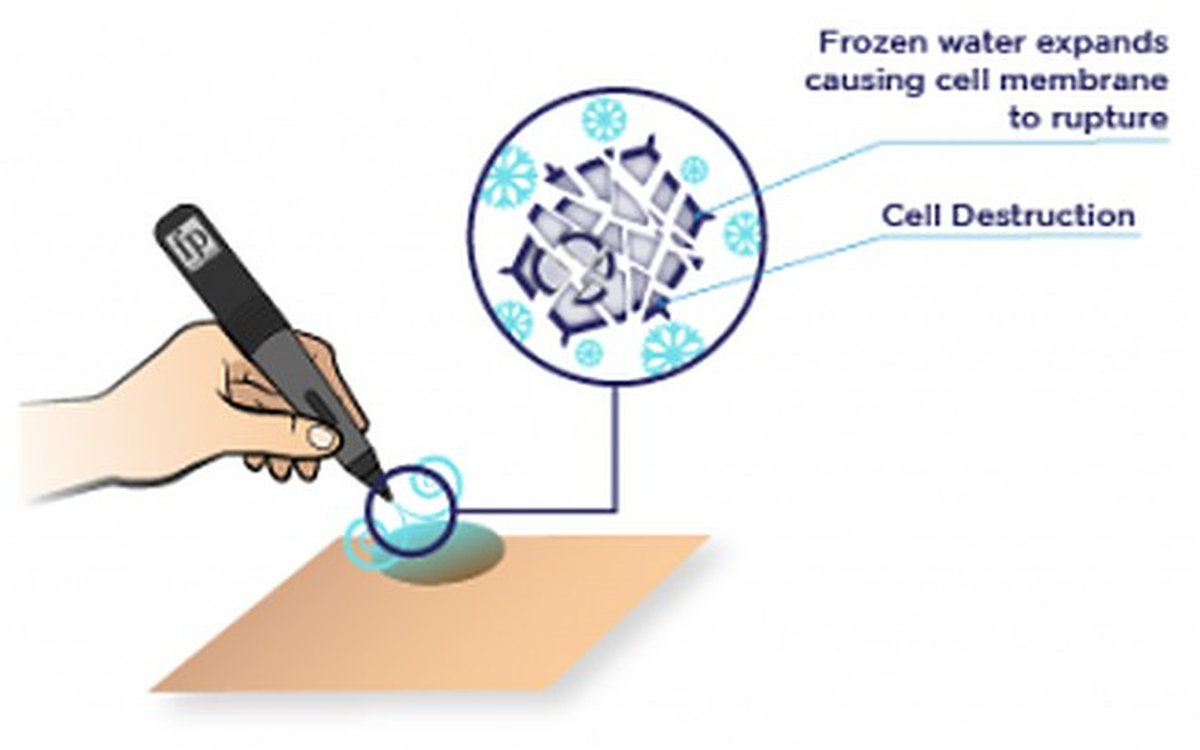
Diagram: water inside the frozen cells expands into ice crystals and ruptures the cell membranes
Step 02

The cells break down

Water inside the targeted cells turns to ice and expands, which ruptures the cells. Only the frosted area is affected.

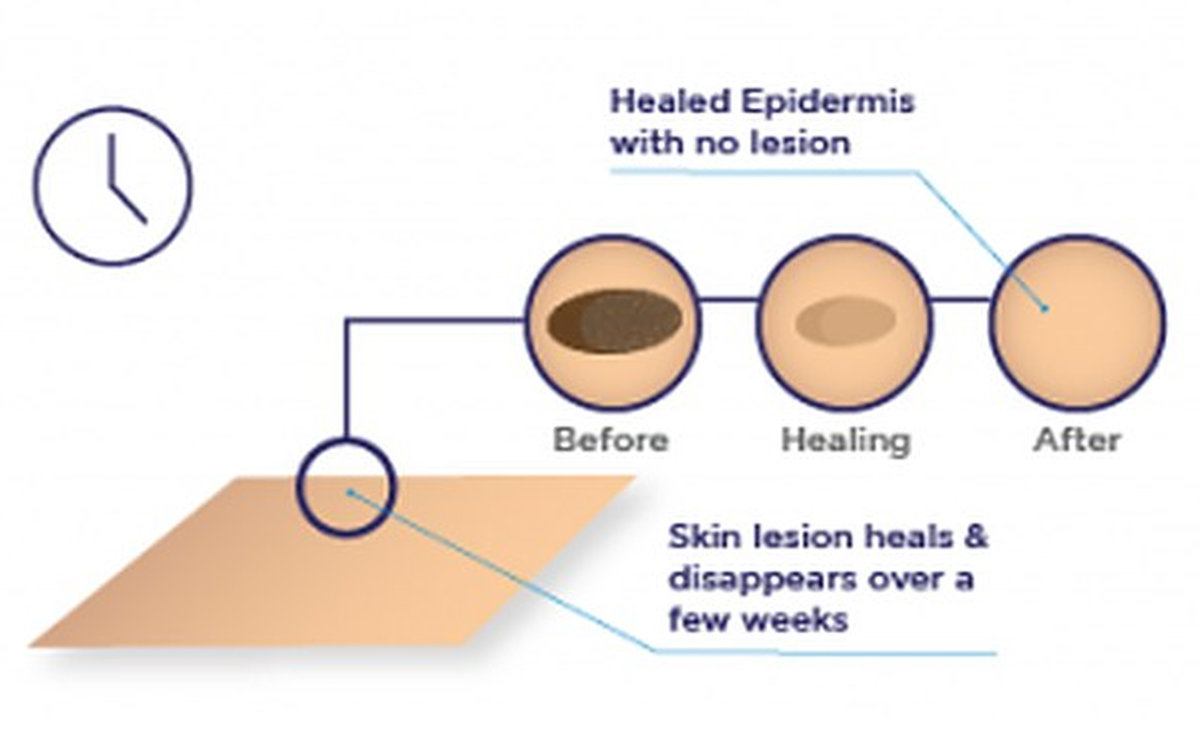
Diagram: a brown lesion goes from before, to healing, to healed skin with no lesion over a few weeks
Step 03

Your skin heals

Over the following weeks the treated spot darkens, crusts and falls away, and new skin grows in underneath.

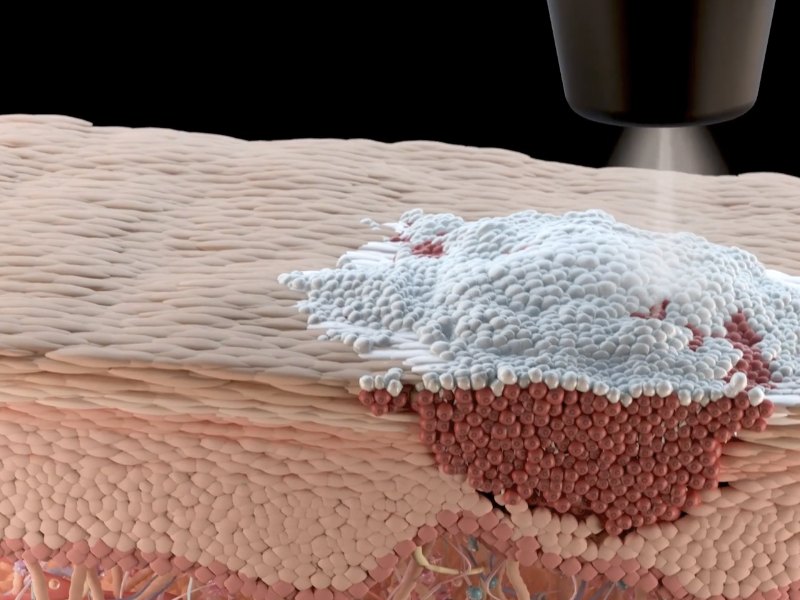
3D illustration of a cryotherapy tip freezing a lesion in the top layer of the skin, with frost covering only the treated spot

Why does it treat the spot but spare the skin around it?

The depth of the freeze depends on how long the tip is held on the spot, measured in seconds. A small skin tag might need a single short burst; a thick wart may need a longer freeze or a second cycle after it thaws. Our aesthetic nurse and aestheticians watch the frost ring and stop as soon as it reaches just past the edge of the spot.

Traditional liquid nitrogen is colder (about −196°C) and is usually sprayed or dabbed on with a cotton swab, so the freeze spreads more widely. The Freeze Pen's fine tip and slightly milder temperature make it well suited to small spots and delicate areas, such as near the eyes.

What It Treats

What Can the Freeze Pen Remove?

The Freeze Pen is for small, harmless (benign) spots on the surface of the skin. These are the ones we treat most often:

Skin Tags

Soft, flesh-coloured flaps of skin on a thin stalk, common where skin rubs: the neck, underarms, eyelids, groin and under the breasts. Harmless, but they catch on jewellery and clothing.

Sessions: Usually 1 sessionCommon on: Neck, underarms, eyelids
Warts

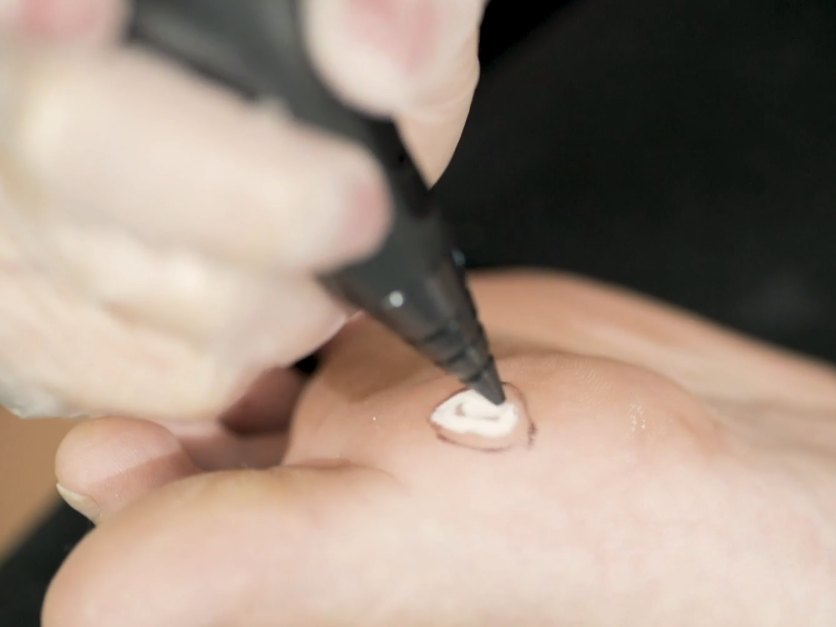
Rough, raised growths caused by a virus, including common warts on the hands and fingers, flat warts, and plantar warts on the soles of the feet. Plantar warts are often the most stubborn.

Sessions: Often 2 or more sessionsCommon on: Hands, fingers, feet

Age Spots and Sun Spots

Flat brown or grey patches, also called liver spots or solar lentigines, caused by years of sun exposure. They show up on the face, hands, chest and arms.

Sessions: Usually 1 sessionCommon on: Face, hands, chest

Seborrheic Keratoses

Waxy, "stuck-on" brown or tan growths that are very common after 40. They're often mistaken for warts but aren't contagious.

Sessions: 1 to 2 sessionsCommon on: Back, chest, face, scalp

Cherry Angiomas

Small, bright red dots made of tiny blood vessels. They're harmless and very common with age. Small ones respond well to freezing.

Sessions: 1 to 2 sessionsCommon on: Chest, back, arms

Milia and Molluscum

Milia are tiny, hard white bumps of trapped keratin, often around the eyes. We can freeze or extract them; the aesthetician chooses at your visit. Molluscum contagiosum are small, pearly bumps caused by a virus, assessed case by case.

Sessions: Assessed at your visitCommon on: Face, eyelids, body

Spots on the face, eyelid area, neck, chest, back, arms, hands and feet can all be treated. Spots close to the eyes and on darker skin are treated with extra care, because the risk of colour change is higher.

What We Don't Freeze

Freezing destroys the tissue, so nothing is left to send to a lab. That's why some spots need a different approach:

Moles

We don't freeze moles. If you want a mole removed, it's done by minor excision so it can be examined. See lump and bump removal.

Changing or unusual spots

Anything new, growing, changing colour or shape, bleeding or itching must be assessed and cleared by your family doctor or dermatologist first. We don't freeze anything suspicious or undiagnosed.

Rough, scaly sun spots

Actinic keratoses can be precancerous. They must be assessed and cleared by your family doctor or dermatologist first. We don't freeze anything suspicious or undiagnosed.

Lumps under the skin

Cysts and lipomas sit under the skin, out of reach of freezing. They're removed through a small incision instead.

Is It Right for You?

Who Is a Good Candidate for the Freeze Pen?

The Freeze Pen suits most healthy adults with small, harmless spots they'd like gone. You're likely a good candidate if:

  • Your spot is small and on the surface. Skin tags, warts, age spots, seborrheic keratoses and small cherry angiomas respond best.
  • It has been identified as harmless. Or it has already been assessed and cleared by your family doctor or dermatologist. We don't freeze anything suspicious or undiagnosed.
  • You want a quick option. No incision, no stitches and usually no time off.
  • You're in good general health. With healthy skin in and around the area to be treated.

When Freeze Pen May Not Be Suitable

Active skin problems

An infection, inflamed skin condition or sunburn in the treatment area. We wait until it settles.

Pregnancy or breastfeeding

It's best to wait until after.

Cold sensitivity

Conditions such as cold urticaria, Raynaud's or cryoglobulinemia, which react badly to cold.

Cold sores

A history of cold sores can flare if you're treated near the lips. Tell us beforehand.

Keloid scars

If you form thick, raised scars, we'll talk about whether another option is safer.

Blood disorders

Some blood and circulation conditions affect how skin reacts to freezing.

Before Your Visit

How Do I Prepare for Freeze Pen Treatment?

Avoid tanning

Don't tan or burn the area in the weeks before. Tanned skin is more likely to change colour after freezing.

Tell us about your health

Share any medical conditions, medications and allergies, including blood thinners and anything you use on your skin.

Skip creams on the day

Leave the area free of lotions, self-tanner and makeup on the day of your visit.

Make a list

Note or photograph the spots that bother you, so we can plan how many can be treated in one session.

Freeze Pen tip freezing a small spot on the back of a hand, with white frost visible on the skin
Treatment Day

What Happens During a Freeze Pen Appointment?

New patients can usually be assessed and treated in the same visit. A Freeze Pen visit at our private surgical facility usually takes 5 to 15 minutes of treatment time, depending on how many spots you have.

Step 01

Assessment

Our aesthetic nurse and aestheticians check each spot to confirm it's suitable for freezing. Anything suspicious or undiagnosed is not frozen; it must be assessed and cleared by your family doctor or dermatologist first.

Step 02

Preparation

The skin is cleaned. Most people don't need numbing; it's available if you'd like it.

Step 03

Freezing

The pen tip is held on each spot for a few seconds until it frosts white. You'll feel a cold, stinging sensation that fades within minutes.

Step 04

Back to your day

You get written aftercare instructions and a follow-up booking. Most people go straight back to work.

Aftercare

Freeze Pen Aftercare: What to Do After Treatment

Freeze Pen healing is simple, but a little care helps the spot heal cleanly and lowers the chance of a mark:

Expect some redness

The area will be pink, slightly swollen and tender for a few hours. That's your skin's normal response to the cold.

Leave blisters alone

A small blister may form within a day. Don't pop it, and don't pick at the scab that follows. Let it fall off on its own.

Keep it clean and moist

Wash gently as normal. Apply petroleum jelly, such as Vaseline, as directed until the area has fully healed.

Protect it from the sun

Use SPF 30 or higher on the treated area for several months. Fresh skin is prone to colour change.

Hold the makeup

Avoid makeup on the treated spot itself until the scab has fallen off and the skin has closed.

Come back at 4 weeks

Your follow-up visit is included in the session price. We check the result then. Some spots need more than one session, depending on size.

Freeze Pen Healing Timeline

Healing varies with the size and type of spot. This is what most people can expect:

  1. Right after

    White frost, then pink

    The spot turns white for a few seconds, then pink. A mild sting fades within minutes.

  2. Day 1 to 2

    Redness or a blister

    The area may be red and swollen, and a small, clear blister can form. Don't pop it.

  3. Days 3 to 14

    Scab forms and falls off

    The spot darkens, crusts and flakes away. Let it fall off naturally.

  4. Weeks 3 to 5

    New skin settles

    The new skin is pink at first and gradually blends in. Most spots are gone by now.

  5. Week 4

    Follow-up visit

    Your follow-up visit is included. We check the result. Some spots need more than one session, depending on size.

  6. Months 2 to 6

    Colour evens out

    Any lighter or pinker patch slowly fades. Keep using sunscreen.

Transparency First

What Are the Risks and Side Effects of the Freeze Pen?

The Freeze Pen is a low-risk treatment, but freezing skin can cause side effects. They include:

Discomfort

A cold sting or burning during treatment, and tenderness for a few hours to a few days.

Blisters and swelling

Common and expected. They settle as the spot heals.

Colour change

The treated skin can end up lighter or darker. This is more likely on darker skin tones and is occasionally permanent.

Scarring

Uncommon, but possible, especially with deeper freezes or if a scab is picked.

Return of the spot

Some spots, especially warts, can come back or need more than one session. New spots can also appear over time.

Infection or slow healing

Rare with good aftercare. Very rarely a small sore forms that takes longer to heal. Hair loss on the treated spot is also rare.

When to call us. Call us if the area becomes increasingly red, hot, swollen or painful, oozes pus, or if you develop a fever. Phone 613-591-1099.

Your Options

Freeze Pen vs Laser vs Surgical Removal

There's more than one way to remove a skin spot. Here's how the Freeze Pen compares with the other options we offer:

Freeze PenLaserSurgical excision
How it worksFreezes the spot with nitrous oxideLight energy heats the targetThe spot is cut out and the skin stitched
ComfortBrief cold sting; no needlesModerate; often a snapping feelingLocal anesthetic injection
Treatment time5 to 15 minutes10 to 30 minutes30 to 60 minutes
HealingScab falls off in about 1 to 2 weeksAbout 1 to 2 weeksAbout 2 to 4 weeks; stitches
Scarring riskLowLow to moderateA fine line scar
Lab testing possibleNoNoYes
Best forSmall, harmless surface spotsRed veins and wider areas of pigmentMoles, cysts, lipomas and anything that should be examined

Not sure which suits your spot? See Laser Spider Vein Treatment and Lump and Bump Removal, or ask at your consultation.

About the Freezpen Device

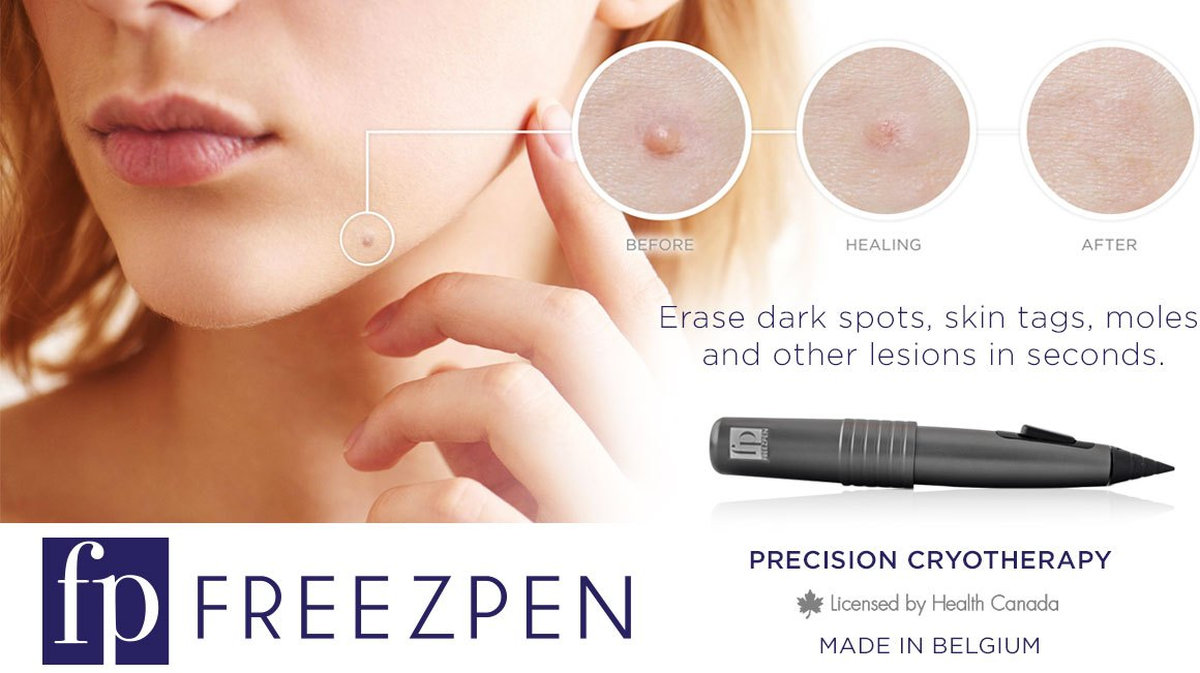
We use Freezpen, a hand-held precision cryotherapy pen made in Belgium and licensed by Health Canada. It runs on small cartridges of nitrous oxide, so there's no tank of liquid nitrogen in the room and no spray drifting onto the skin around your spot.

Its fine applicator tip lets our aesthetic nurse and aestheticians place the freeze exactly on the spot, which matters most on the face, eyelid area and other small, visible areas.

Freezpen precision cryotherapy pen, made in Belgium and licensed by Health Canada, with a skin spot shown before, during healing and after
Investment

How Much Does Freeze Pen Cost in Ottawa?

$150 to $300Per session

5 to 15 minTreatment time per session

Freeze Pen treatment at Kanata Plastic and Cosmetic Surgery is $150 to $300 per session. Where you fall in that range depends on the size and number of spots treated. Several small spots can often be treated in the same session. A follow-up visit is included in the session price.

We're a private-pay practice, so you're booked on your schedule. Your exact price is confirmed at your consultation, before anything is treated. See all our prices on the cost and financing page.

Why KPCS

Why Choose Kanata Plastic and Cosmetic Surgery for Freeze Pen?

  • Treated by our aesthetic nurse and aestheticians. Freeze Pen appointments at our Kanata facility are performed by our aesthetic nurse and aestheticians. Every spot is assessed before it is frozen.
  • Assessed first, not just frozen. Every spot is checked before treatment. We don't freeze moles, or anything suspicious or undiagnosed. Those need to be assessed and cleared by your family doctor or dermatologist first.
  • A plastic surgery practice behind it. Our private surgical facility is led by Dr. James Lacey, a Royal College certified (FRCSC) plastic surgeon in practice since 2005. If a spot needs excision instead, that's available at the same address through lump and bump removal
  • Health Canada licensed device. We use the Freezpen precision cryotherapy pen, with a fine tip for small and delicate areas
  • Clear pricing. $150 to $300 per session, confirmed before treatment, with a 4-week follow-up visit included
  • Easy to reach. About 20 minutes from Stittsville and Nepean and about 25 from downtown Ottawa, with free parking

Schedule a Consultation

Coming from Ottawa?

Freeze Pen Treatment Close to Home in Ottawa

Our private surgical facility is at 895 March Road in Kanata. Your consultation, Freeze Pen treatment and 4-week follow-up all happen in the same place.

Free Parking
  • KanataAbout 10 min
  • StittsvilleAbout 20 min
  • NepeanAbout 20 min
  • BarrhavenAbout 25 min
  • Downtown OttawaAbout 25 min
  • OrléansAbout 35 min

Approximate driving times without traffic. Allow extra time at rush hour.

Travelling from farther away? See our out-of-town patient guide for travel and hotel tips.

Freeze Pen: Frequently Asked Questions

How much does Freeze Pen cost in Ottawa?

Freeze Pen treatment at Kanata Plastic and Cosmetic Surgery is $150 to $300 per session, depending on the size and number of spots treated. Your exact price is confirmed at your consultation, before anything is treated. A follow-up visit is included in the session price.

Does the Freeze Pen hurt?

Most people describe a quick, cold sting, a bit like an elastic snap, that fades within minutes. There are no needles. Most people don't need numbing; it's available if you'd like it.

How many Freeze Pen sessions will I need?

Many skin tags, age spots and small seborrheic keratoses go after one session. Some spots need more than one session, depending on size. Warts, especially plantar warts, and thicker spots often need two or more. Your follow-up visit, about 4 weeks later, is included in the session price.

Can the Freeze Pen remove skin tags?

Yes. Skin tags are one of the most common reasons people choose the Freeze Pen. Small tags on the neck, underarms and eyelid area usually respond to a single short freeze. Large tags on a thick stalk may be better snipped off as a minor procedure.

Does the Freeze Pen work on warts, including plantar warts?

Yes. Freezing is a long-standing treatment for common, flat and plantar warts. Because warts are caused by a virus, they can be stubborn, and plantar warts on the soles of the feet often need more than one session.

Can you freeze off a mole?

We don't freeze moles. Freezing destroys the tissue, so nothing is left to examine under a microscope. If you'd like a mole removed, it's done by minor excision through our lump and bump removal service, so it can be checked.

How long does it take for the spot to fall off?

The spot usually darkens and forms a scab within a few days, and the scab falls off on its own in about 1 to 2 weeks. The new skin underneath is pink at first, and most spots are gone in about 4 to 5 weeks.

Will the Freeze Pen leave a scar or mark?

Scarring is uncommon because the freeze is limited to the spot. The most common lasting effect is a patch of lighter or darker skin. Protecting the area from the sun and not picking at the scab lowers that risk.

Is the Freeze Pen safe for darker skin tones?

It can be used on all skin types, but darker skin is more likely to lighten or darken where it was frozen, and that change can be long-lasting. We'll talk through your risk and may use shorter freezes or suggest another option.

Is the Freeze Pen the same as liquid nitrogen?

No. Both freeze the spot, but the Freeze Pen uses nitrous oxide at about −89°C through a fine tip, while liquid nitrogen is about −196°C and is usually sprayed or dabbed on. The pen's precision makes it well suited to small spots and delicate areas.

Is the Freeze Pen safe?

Yes, when used on the right spots. We use Freezpen, a precision cryotherapy pen licensed by Health Canada, and every spot is assessed before it's treated. We don't freeze anything suspicious or undiagnosed. Side effects are usually limited to redness, a blister and a scab that heal on their own.

Can I go back to work after Freeze Pen treatment?

Yes. Most people go straight back to work or their normal routine. Keep the area clean, don't pick at any blister or scab, and avoid makeup on the treated spot until it has healed.

Do you freeze actinic keratoses or suspicious spots?

No. Actinic keratoses and anything suspicious or undiagnosed must be assessed and cleared by your family doctor or dermatologist first. We don't freeze anything that hasn't been diagnosed or okayed.

Can I be assessed and treated on the same day?

Yes. New patients can usually be assessed and treated in the same visit.

Explore More

Related Treatments

Smiling woman with clear skin resting her chin on her hand

Book Your Freeze Pen Appointment

Tell us which spots bother you and where they are. Our team will book your assessment at our private surgical facility in Kanata, or call 613-591-1099.

RECENTLY ON THE BLOG

News & Events

20th anniversary kanata plastic surgery
Injectable Specials
webmaster

Our 20th Anniversary Specials

Celebrating 20 Years of Beauty, Trust and Transformation For two decades, Kanata Plastic & Cosmetic Surgery has been Ottawa’s premier destination for personalized cosmetic surgery

Read More »

Bothered by a skin tag, wart or age spot? Book a Freeze Pen consultation in Kanata. Every spot is assessed first, and new patients can usually be treated in the same visit.